Wrexham Social Prescribing - Gina Mollett, Go & See Microbursary 2025-26
03/04/2026 | Author: Gina Mollett
I visited Wrexham to go and see social prescribing projects that had a focus on arts engagement and community gardening. My trip taught me the importance of grassroots community groups, and how community organizing can become a creative health intervention.
I had never visited Wrexham before and was completing an online short course at Wrexham University on the subject of Arts in Health. I wanted to connect with Social Prescribing projects in Wrexham that had a focus on arts engagement and community gardening. I work as a Social Prescribing Link Worker and have developed nature-based Creative Health activities in partnership with community gardens and green social prescribing initiatives. I am also a Creative Practitioner and am completing a year of research and development, funded by Arts Council’s ‘Developing Your Creative Practice’, exploring nature-based creative health interventions for children and adults. It was important to me to connect with grassroots community groups in Wrexham to explore how creative health initiatives can be developed from the ground upwards.
My first stop was Wrexham Miners Project where I was given a tour and learnt about the Gresford Colliery Explosion in 1934. This gave me a good grounding in understanding the local and social history of Wrexham. I attended the Arts4All inclusive art group for adults with disabilities and met a student from Wrexham University on the MA Arts in Health programme. It was interesting to learn about the Miners Project’s plans for a social housing project to provide accommodation for adults with learning disabilities.

I met with John, a volunteer and community gardener with Incredible Edible. John introduced me to the Incredible Edible sites on Mount Street and Madeira Hill. The volunteers have turned unloved spaces into a place for growing fruit, vegetables and herbs. The produce is free for the general public. They have collaborated with local artists to design a mural and signage which has helped to make the spaces feel welcoming.
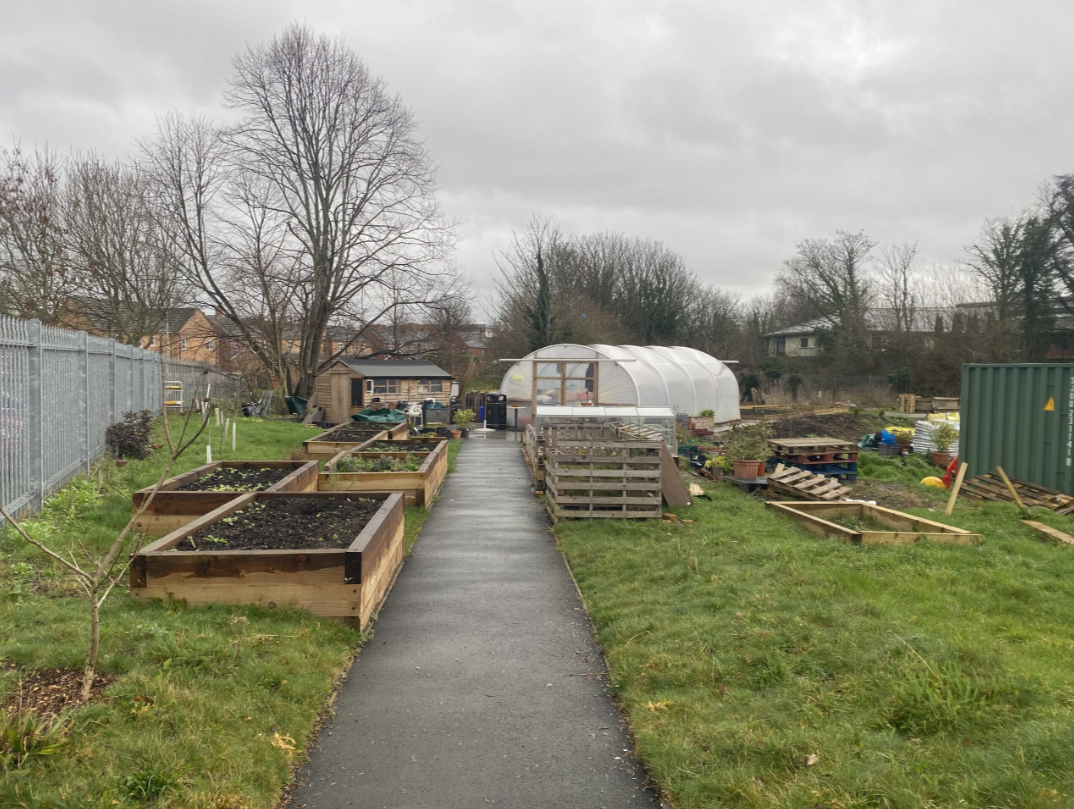
John also took me to the Broom Grove Community Garden that is run by U Are UK. The garden is run by volunteers and supports local people who are seeking refuge and asylum in the UK. The garden grows fruit, vegetables and herbs that is used at The Peace Kitchen in the city centre to produce community ‘pay what you can’ meals.
I met with Tom and Evan from Wrexham Community Gardeners who gave me a tour of the courtyards that they look after at Wrexham Maelor Hospital. This included spaces in the Occupational Therapy department, a chapel garden, and the Shooting Star cancer unit. I learnt that everyone volunteers with the community gardeners for a different reason, and that all levels of gardening knowledge and ability were welcome to take part. It was interesting to learn that these spaces are often used by staff within the hospital and I reflected on how community gardening can benefit both the volunteer and the garden user / viewer. It was great to see that the volunteers were embedded into the hospital and were well known to other volunteers and staff members.
I was blown away by the warmth of the volunteers that I met with at each of the community groups mentioned above. They were so welcoming, passionate and generous with their time showing me around their projects. This made me reflect on the importance of grassroots community groups and that funding priorities within the local area should value and sustain these!
I visited the following exhibitions:
- Jonathan Le Vay – Opus at Tŷ Pawb. Unfortunately I was unable to visit the community garden due to access issues.
- Of Light and Landscape by Stephanie Carlton at Insert Gallery, Wrexham School of Art
I found myself reflecting on the themes of access, recovery and community, and asked myself the following questions:
What makes a project accessible? Thinking about location, opening times, a friendly face to welcome you and introduce you to something new.
How can a project support recovery? Thinking about opportunities to volunteer, but also opportunities to engage and spend time in something that has been produced by volunteers. How a project can benefit a wider community even if they are not able to take part. E.g. by having a room with a garden view inside the hospital, or by collecting free organic produce that has been grown with love.
What makes a project have a sense of community? Thinking about volunteers who dedicate their time, the importance of grassroots community groups and questioning how we can sustain these longer term? What does the funding situation look like for grassroots community groups?

This trip, along with completing my Arts in Health short course at Wrexham University has helped me to develop ideas for a community garden at a GP practice within my role as a Social Prescribing Link Worker. The garden can become a space for local residents, patients and staff to volunteer and get involved in growing a range of plants, flowers, vegetables, fruit and herbs. The garden can also become a space for our Creative Wellbeing programme of nature-based arts activities for patients and staff which will include flower pressing, printmaking and cyanotypes.
By Gina Mollett