Case Study: Our Story
Authors(s), Creator(s) and Contributors: Hongyi Li Chinese Autism Community Interest Company
Publication Date: 07/01/2026
Categories: Case Studies
Partner(s): Chinese Autism CIC Hijinx Swansea Bay University Health Board Cwmpas (evaluation partner
Funder(s): Arts Council of Wales
Introduction
Chinese Autism – Our Story' is a bilingual participatory arts-and-health project highlighting the lived experiences of two Chinese autistic families in Wales. Centred around a documentary and delivered in partnership with Hijinx and Swansea Bay University Health Board, the project addressed cultural stigma, language barriers, and isolation within the Chinese autistic community. Through filmmaking, expressive arts, and culturally informed training for artists and health professionals, the project aimed to build awareness, understanding, cultural competence, acceptance, and inclusive practice across Wales.
The Challenge
Chinese families living with autism in Wales face deep cultural stigma, language barriers, and limited access to support. Autism is often considered shameful within the community, leading to secrecy, isolation, and avoidance of diagnosis. Research shows that the Chinese community has the lowest rate of engagement with NHS autism and mental-health services. This project was developed in response to concerns raised by families, and through discussion with Hijinx and SBUHB, who identified a need for culturally sensitive training. The project aimed to break silence, increase understanding, and reduce stigma through arts-based storytelling.
The Approach
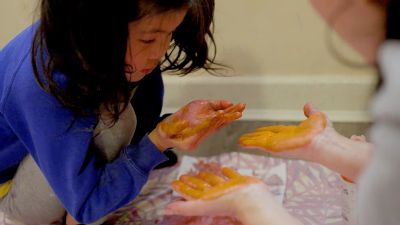
The project combined documentary filmmaking with expressive arts and tailored training. Three art sessions were conducted: two with the mothers (pre-/post-production), and one bringing both families together. Over several months, a Welsh filmmaker and an interpreter worked closely with two autistic families to capture their everyday realities. Recruitment required years of trust-building due to cultural stigma. Hazel, a multilingual autism specialist, volunteered to provide cultural mediation and emotional support throughout filming. All footage was translated into English and Welsh. Three training sessions were delivered: two in-person workshops for Hijinx students in Cardiff, and one online session for Swansea Bay University Health Board health professionals (moved online due to late-year staffing pressures). Each session included documentary viewing, creative reflection activities, group discussion, and practical cultural-competency learning. In total, three workshops and training sessions engaged approximately 70 participants. The total project cost was £17,530. Good practice included external evaluation (Cwmpas), pre and postsession surveys, trauma informed approaches, co-production with families and partner organisations to ensure cultural and emotional safety,
The Impact
Evaluation combined pre/post surveys, reflective exercises, interviews, and a Theory of Change framework led by Cwmpas. Feedback was "overwhelmingly positive", emphasising the "project’s success in meeting the fund’s aims and delivering meaningful health and wellbeing benefits". Findings showed significant increases in cultural understanding, empathy, and practical confidence among artists and health professionals, shining a "powerful" light on gaps in understanding and provision amongst service providers. For the families, impact was profound. Initially anxious about visibility and stigma, they expressed joy and pride when watching the final film together. Bravely sharing their deeply personal lived experiences initiated a shift from fear and shame to healing and selfacceptance; one parent told Hazel “for the first time, I feel I’m not hiding.” Unintended outcomes included Hijinx students requesting further learning collaborations with CACIC on cultural competence, and health professionals recognising gaps in linguistic accessibility and their intent to collaborate further with CACIC to provide more workshops to The project demonstrated that arts-based storytelling can reduce stigma, support wellbeing, and strengthen trust with marginalised communities
Lessons Learned
We learned that: - trust-building takes time, especially within communities carrying cultural stigma - flexibility was essential, especially when NHS training had to move online - translation needs were far greater than anticipated, but vital for accessibility - future projects will include longer lead-in periods, dedicated interpretation budgets, and earlier scheduling with health partners
The Legacy
The documentary will continue to be used in training across arts and health sectors. Families reported increased confidence in discussing autism, marking a lasting personal transformation and healing progress. Partners are exploring further collaborations to capture more Chinese autistic stories. The "impact of this project will likely grow exponentially" as the documentary is released publicly in the Senedd in March 2026, and has the "potential to create real and lasting positive change for Chinese autistic families across Wales".
Website and Social Media Links
Website: https://chineseautism.org.uk Facebook:https://www.facebook.com/chineseautismuk Instagram:https://www.instagram.com/chineseautismuk/ Documentary link (Youtube Unlisted at the moment): https://www.youtube.com/watch?v=22NsQjYJhhI Hijinx training feedback: https://www.youtube.com/watch?v=8I7-nOUKTEk
Contact Details
Hazel Lim cacic@chineseautism.org.uk
Tags: Arts activity - Documentary, film, digital arts, autistic lived experience, healthcare training, arts workshops, multilingual project, inclusive arts, Wales arts health, community informed storytelling, Participant/beneficiary group - neurodivergent families, Chinese community, mental health, Hijinx Academy, Swansea Bay UHB, Mandarin-speaking communities, welsh artists, professional artists, learning disability art students, Chinese autistic families, healthcare professionals, neurodivergent women, late discovery Context and/or health and wellbeing needs addressed - stigma reduction, cultural barriers, wellbeing support, social isolation, cultural stigma and silence, empowerment and awareness, cultural and social inclusion, cultural/neurodiverse affirming accessible spaces, diagnosis avoidance, cultural competence, non-stigmatised language, language barriers, loneliness