Case Study: Diabetes Diaries
Authors(s), Creator(s) and Contributors: Katie Henderson: Freelance Artist Practitioner
Publication Date: 14/05/2026
Categories: Case Studies
Partner(s): University of South Wales
Funder(s): N/A (Self-funded)
Introduction
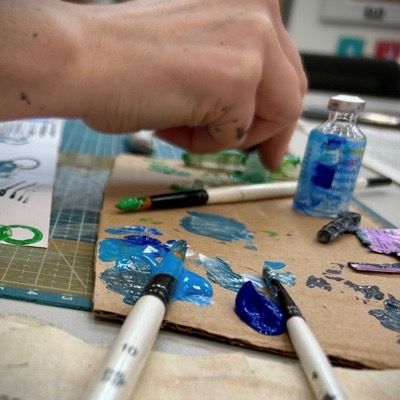
The Diabetes Diaries is a pilot community-based arts project exploring whether printmaking workshops can support reflection, emotional wellbeing and peer connection among adults living with Type 1 diabetes. Developed by Katie Henderson, an artist living with Type 1 diabetes as part of her MA Arts, Health and Wellbeing, the project draws on lived experience alongside wider understanding of diabetes care and emotional wellbeing in long-term condition management. Over an intensive weekend, four printmaking activities were delivered at the University of South Wales with three women aged 30–55 living with Type 1 diabetes. Participants engaged in guided printmaking processes including monoprint, stamping and etched printmaking to explore the realities of self-management, emotional experience and identity in a supportive, non-clinical environment. The sessions also included reflective discussion and peer exchange alongside creative making.
The Challenge
Living with Type 1 diabetes involves continual monitoring, insulin management and daily decision-making, which can contribute to emotional strain and diabetes distress. Alongside the physical demands of blood glucose management, many people experience isolation, self-criticism and pressure linked to self-management expectations. Conversations with NHS and Public Health Wales professionals highlighted concerns that stress, burnout and wider life pressures can reduce engagement with healthcare support and self-management routines over time, which can increase the risk of longer-term diabetes-related complications affecting both physical and mental health. Participants also reflected on difficulties accessing peer support beyond diagnosis and the lack of age-appropriate spaces for shared experience. "Diabetes Diaries" responded to the need for supportive, community-based spaces where adults with Type 1 diabetes could connect, reflect and share experiences outside clinical environments.
The Approach
The project delivered two 3.5-hour printmaking workshops in a university art studio at the University of South Wales. Three adult participants (aged 30–55) and the facilitator, all living with Type 1 diabetes, took part in an intensive weekend workshop delivered at the University of South Wales. Participants were recruited through social media platforms, diabetes communities and existing networks, focusing on adults with lived experience of long-term self-management. Four different workshops used accessible printmaking techniques including mono-printing, etching, stamping, mark-making, and ink removal processes. Participants were invited to work with personal glucose data, diabetes-related materials (such as testing supplies and packaging), and metaphor as creative stimulus, using these within print processes to explore lived experience. Each workshop followed a structured format comprising guided creative activity, individual reflection (written and visual), and facilitated group discussion. This allowed participants to move between making and reflection in a supported, non-clinical environment. Across the two days, participants produced a range of print-based outputs including mono-prints, layered experimental prints, and process-based works documenting exploration and reflection rather than fixed outcomes. A selection of reproduced artworks was later presented in a public exhibition at the Hummingbird Diabetes Centre, Royal Glamorgan Hospital to share these lived experiences in a clinical setting. The project was delivered by a single lead artist facilitator, with input from the University of South Wales supporting reflective evaluation and ethical practice, including consent procedures and guidance around working with personal health-related materials. The project was informed by the Individual and Family Self-Management Theory (Ryan & Sarwin, 2009), particularly around self-awareness, confidence, emotional regulation, and social support.
The Impact
The pilot was evaluated using qualitative methods including participant written reflections, group discussions, facilitator reflective notes and analysis of participant artworks. These approaches were used to capture both verbal and non-verbal responses to the creative process, and to understand how participants experienced reflection, emotional expression and peer interaction within the workshops. Findings demonstrated strong potential for arts-based approaches to support emotional wellbeing, reflection and peer connection among adults living with T1D's. Participants described the workshops as calming, therapeutic and a rare opportunity to feel understood by others with shared lived experience of diabetes. Printmaking processes enabled participants to express experiences that are often difficult to verbalise, supporting new ways of reflecting: “I didn’t realise how far I’ve come with my diabetes…seeing that makes me feel proud.” (Participant B). The repetitive and tactile nature of printmaking also supported emotional regulation, with participants describing a sense of slowing down and temporary relief from the constant demands of diabetes management: “It’s hard to switch off with diabetes…But just to sit and do this, it’s quite nice to switch off and slow down.” (Participant B). Peer connection emerged as a key outcome, with participants highlighting the value of shared understanding and reduced feelings of isolation when working alongside others with the condition. The use of diabetes-related materials within creative processes also led to an unintended but significant outcome, where medical equipment was reframed as a tool for expression rather than solely clinical use, shifting perceptions of familiar self-management objects. Overall, the project identified key impacts including increased reflective self-awareness, emotional regulation, and the value of creative peer support as a complementary approach to existing forms of diabetes support.
Lessons Learned
The pilot highlighted the value of printmaking as a tool for fostering reflective self-awareness, enabling participants to explore their relationship with diabetes in new ways. Peer connection was central to reducing isolation and developing shared understanding. Working with personal health data was found to evoke emotional responses, indicating the sensitivity of this material within a creative context. Future iterations would benefit from allowing more time to build confidence and comfort with such materials, alongside clearer framing and introduction of sensitive prompts to support reflective depth and participant confidence. Repetitive making processes also supported calm and emotional regulation.
The Legacy
The project demonstrates the potential for creative peer-support to extend into ongoing self-management practice for adults living with Type 1 diabetes. Participants highlighted the importance of shared understanding and community, identifying a gap in provision for adults over 25 who often fall between existing support pathways. The approach has potential to be embedded within community and healthcare settings as a complementary model of support alongside clinical care. Future development could explore longer-term delivery, partnership working with diabetes services and charities, and expanded access to creative wellbeing spaces. “It was…that real feel of shared understanding and community that really made the difference.” (Participant A)
Website and Social Media Links
Project Video Summary: https://www.youtube.com/watch?v=BMeXqPJHmCY Project Lead Information: Linktr.ee/katiehenderson_artist https://katiehenderson1293.wixsite.com/arts-practitioner Instagram: @katiehenderson_artist
Contact Details
Katie Henderson: Katiehenderson_artist@hotmail.com
Tags: Printmaking, Visual Arts, Diabetes, Type 1 Diabetes, Wellbeing, Peer Support, Chronic Illness, Community Arts, Reflective Practice, Emotional Wellbeing, South Wales, Arts in Health